Deep in the Garhwal Himalayas of Uttarakhand lies one of Hinduism’s most revered pilgrimage circuits — the Panch Kedar. Spread across five distinct temples dedicated to Lord Shiva, this sacred trail winds through some of the most breathtaking and least-commercialised terrain in the Indian mountains. Unlike the heavily trafficked Char Dham route, the Panch Kedar circuit demands more from its pilgrims — more altitude, more endurance, and more genuine commitment to the path.
The idea of a Complete Solo Pilgrimage Trek has gained considerable traction among independent travellers in recent years. As trail infrastructure has slowly improved and more firsthand accounts have surfaced online, experienced trekkers and spiritually motivated wanderers alike are beginning to approach this circuit without the structure of an organised group. The appeal is straightforward — your pace, your schedule, and an unfiltered connection with the mountains and the temples that punctuate the route.
This guide is written for 2026 trekkers who want honest, detailed, and actionable information. From the order of temples and trail logistics to solo-specific safety planning and cost breakdowns, everything you need to know before setting out independently is covered here.
Understanding the Panch Kedar Circuit: The Five Sacred Shrines
Before planning a solo attempt, every trekker must understand what the Panch Kedar circuit actually consists of. These are not five stops on a single trail — they are five separate temple sites spread across different valleys and altitudes, each requiring dedicated trekking effort.
The Five Temples of Panch Kedar
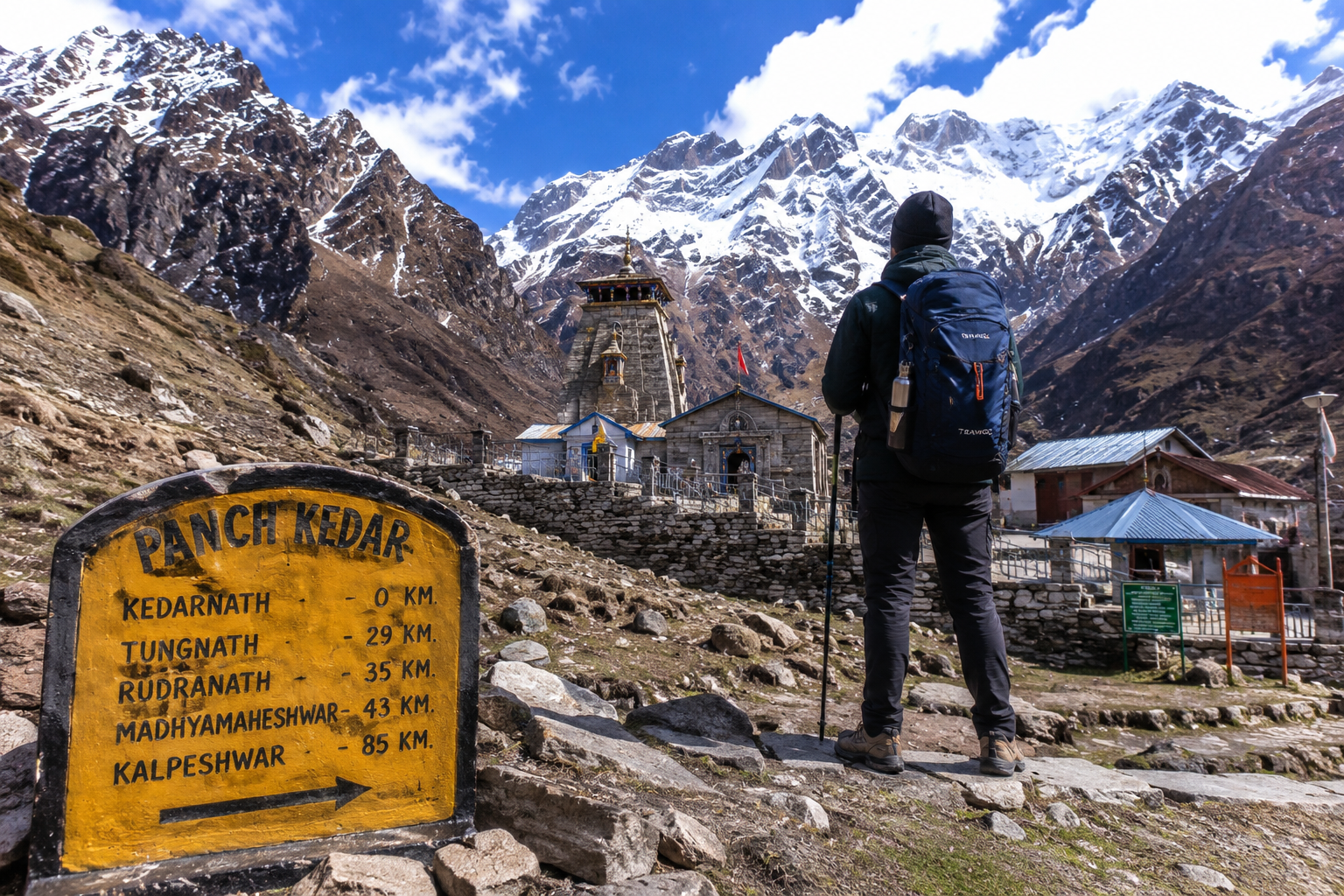
Kedarnath Temple — The most celebrated of the five, situated at approximately 3,583 metres in Rudraprayag district. This is typically the starting point for most pilgrims undertaking the full circuit. The 16-kilometre trek from Gaurikund remains one of the most walked pilgrimage trails in India.
Tungnath Temple — Located at 3,680 metres in the Rudraprayag district, Tungnath holds the distinction of being the highest Shiva temple in the world. The trek from Chopta to Tungnath is roughly 3.5 kilometres, making it the shortest individual segment of the circuit.
Rudranath Temple — At approximately 3,600 metres, Rudranath is widely considered the most remote and challenging of the five. The trek from Sagar village near Gopeshwar involves roughly 24 kilometres of trail through dense forests and alpine meadows.
Madhyamaheshwar Temple — Sitting at 3,497 metres, Madhyamaheshwar is known for its extraordinary views of Kedarnath, Chaukhamba, and Neelkanth peaks. The trail begins from Ransi village and spans approximately 24 kilometres.
Kalpeshwar Temple — The only Panch Kedar shrine accessible year-round, Kalpeshwar sits at around 2,134 metres in the Urgam Valley of Chamoli district. It is the most accessible of the five and often completed last.
Understanding the geography of these five sites immediately clarifies why the Panch Kedar circuit requires not just physical fitness but careful logistical planning — particularly when travelling solo.
Is It Possible to Do the Panch Kedar Solo Trek in 2026?
The straightforward answer is yes — and more people are doing it successfully than ever before. But “possible” and “advisable” are two different things, and distinguishing between them matters enormously on this route.
The trail infrastructure across the Panch Kedar region has seen improvements in recent years. More guesthouses and dharamshalas are operational along key approaches, local guides are available at most trailheads, and trail signage has marginally improved in some areas. BSNL connectivity, while unreliable, exists at certain higher points.
That said, the Rudranath approach remains genuinely remote. The Madhyamaheshwar trail sees limited footfall compared to Kedarnath, meaning you could spend hours on trail without encountering another trekker. For solo trekkers, this demands a specific kind of preparedness that goes beyond fitness and enthusiasm.
A base in Guptkashi is recommended for trekkers beginning the circuit from the Kedarnath side, as it sits strategically along the Kedarnath route and offers reliable accommodation, transport connections, and local guidance. Planning your circuit entry point matters, and Guptkashi remains one of the most practical staging posts for the southern approach to the Panch Kedar circuit.
Recommended Order for a Panch Kedar Solo Trek
Most experienced trekkers and pilgrims complete the circuit in a sequence that minimises backtracking and manages altitude gain progressively. The most widely recommended order for 2026 is:
1. Kedarnath — Start from Gaurikund. Acclimatise to the altitude and establish your trekking rhythm before tackling more remote segments.
2. Tungnath — Proceed to Chopta, trek to Tungnath, and optionally continue to Chandrashila summit for panoramic views. This segment is shorter and serves as a recovery day between more demanding legs.
3. Rudranath — The most challenging segment. Begin from Sagar village near Gopeshwar. Allow two days for this approach. Solo trekkers must be particularly cautious on this trail due to limited footfall and no mobile connectivity beyond the initial village.
4. Madhyamaheshwar — Trek from Ransi village. Allow two days for ascent and descent. The rhododendron forests on this trail are exceptional in late May.
5. Kalpeshwar — Complete the circuit at Urgam Valley. The short, accessible trail is a fitting and gentle conclusion to an intense pilgrimage circuit.
This sequence moves roughly east to west through the Garhwal Himalayas, allowing for a logical transport progression rather than constant backtracking between valleys.
Panch Kedar Solo Trek Route and Day-by-Day Overview
A realistic solo timeline for the complete Panch Kedar circuit spans 18 to 22 days depending on acclimatisation needs, rest days, and weather delays. Attempting to compress this into fewer days significantly increases risk and reduces the quality of the experience.
Approximate Day Breakdown
| Days | Destination / Activity | Details |
| Day 1–2 | Haridwar / Rishikesh Arrival | Reach Haridwar or Rishikesh, complete trip preparation, rest, and acclimatise before starting the trek. |
| Day 3–5 | Kedarnath Trek & Darshan | Travel to Gaurikund, trek to Kedarnath, attend darshan, overnight stay, and return to Sonprayag. |
| Day 6–7 | Tungnath Trek via Chopta | Travel to Chopta, trek to Tungnath Temple, overnight stay, then descend or return. |
| Day 8–11 | Rudranath Trek | Travel to Gopeshwar/Sagar, begin two-day trek to Rudranath, complete darshan, and return trek. |
| Day 12–15 | Madhyamaheshwar Trek | Travel to Ransi village, trek to Madhyamaheshwar over two days, darshan, and descend back. |
| Day 16–17 | Kalpeshwar Trek | Travel to Urgam Valley, short trek to Kalpeshwar Temple, complete darshan, and return. |
| Day 18–19 | Buffer & Return Journey | Keep buffer days for weather delays, recovery, or rest. Travel back to Rishikesh or Haridwar. |
Solo trekkers must build buffer days into this plan. Weather disruptions are common, and having the flexibility to wait out rain or snow without pressure from a fixed group itinerary is one of the genuine advantages of travelling independently.
Permits, Registration, and Formalities in 2026
The permit landscape for Panch Kedar shrines has seen administrative changes in recent years. Here is what solo trekkers need to confirm before departure:
Kedarnath Registration — Online registration through the Char Dham Devasthanam Management Board portal is required for Kedarnath. Slots fill quickly during peak season. Register at least four to six weeks in advance for May and June dates.
Biometric Registration — Biometric registration checkpoints are present at Gaurikund for Kedarnath. Carry original Aadhaar and additional government-issued photo ID.
Tungnath, Rudranath, Madhyamaheshwar, Kalpeshwar — As of 2025 and likely into the 2026 season, formal advance permits are not required for these four shrines beyond standard visitor registration at forest checkpoints along the trail. Confirm the latest requirements closer to your travel date via the Uttarakhand Tourism official portal.
Forest Department Checkpoints — Several trail approaches, particularly Rudranath, pass through reserved forest areas. Carry photocopies of all ID documents and register at every forest checkpoint encountered on trail.
Best Time for a Panch Kedar Solo Trek in 2026
Timing the Panch Kedar solo trek correctly is the difference between a safe, rewarding journey and a dangerous one.
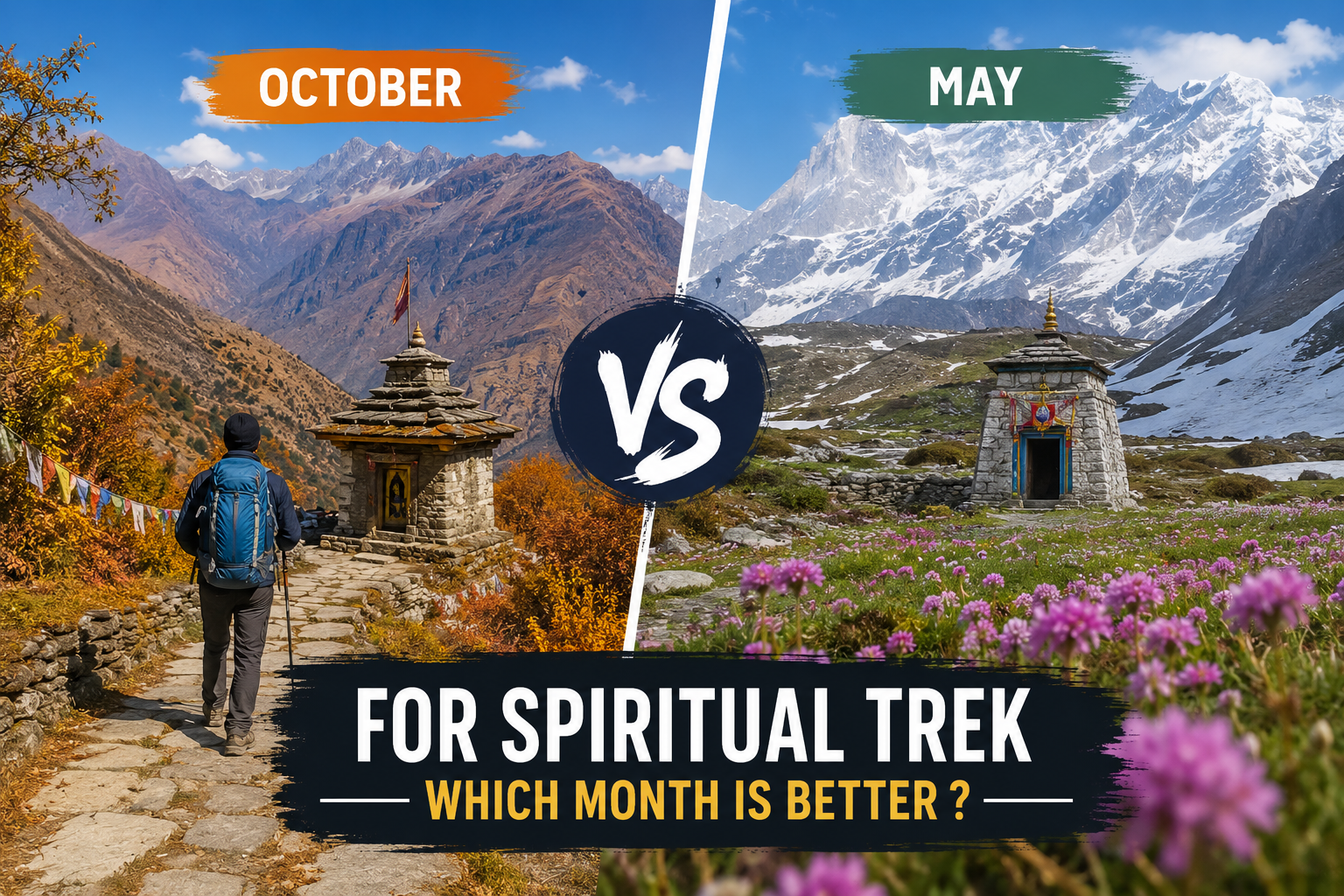
May to June — The most popular window. Trails are clear of snow at most sections, wildflowers are in bloom across the alpine meadows, and temple doors are newly opened following the winter closure. Expect moderate crowds at Kedarnath but relative solitude at Rudranath and Madhyamaheshwar.
September to October — The post-monsoon window is arguably the best for solo trekkers. Skies are clear, visibility is exceptional, and footfall is noticeably lower than the summer season. The risk of leeches and trail erosion from monsoon rains is manageable by September.
July to August — Avoid. Monsoon rainfall makes trails slippery and river crossings dangerous, particularly on the Rudranath approach. Landslide risk is significant on motor roads approaching the trailheads.
November onwards — Temple doors close for winter. Kedarnath typically closes around the auspicious date of Bhai Dooj in November. Other shrines follow varying schedules.
For solo trekkers specifically, late September through mid-October offers the ideal combination of safe trail conditions, clear skies for navigation, and reduced crowds that make independent travel genuinely peaceful.
Anyone researching what the terrain and physical demands actually look like before committing to a solo attempt will find it valuable to read about How Difficult is the Panch Kedar Trek — an honest breakdown of the fitness requirements and trail challenges across all five shrine approaches.
Solo Trekking Safety: What the Panch Kedar Route Demands
Safety planning for a solo Panch Kedar trek goes beyond carrying a first aid kit. The combination of remote trails, altitude variability between 2,100 and 3,680 metres, and limited rescue infrastructure requires deliberate preparation.
Key Safety Measures for Solo Trekkers
- Acclimatise properly before attempting Rudranath or Madhyamaheshwar. Both trails involve rapid altitude gain. Spend at least one night at an intermediate altitude before ascending.
- Hire a local guide for Rudranath. This is the one segment where solo trekking without guidance carries genuine risk. Trail markings are minimal, and the forest approach through Panar and Pana villages requires local knowledge. Guide fees are reasonable and worth every rupee.
- Carry a PLB or satellite communicator. Mobile connectivity disappears on most trail sections beyond the first kilometre. A Personal Locator Beacon or satellite messenger device is a strong investment for solo Himalayan trekking in any season.
- Register your planned route and return date. Inform your guesthouse owner, a local contact, or the forest checkpoint staff of your daily plan. This creates a basic accountability system if you fail to return on schedule.
- Carry altitude medication. Diamox (acetazolamide) for AMS prevention, along with Dexamethasone for emergency use, should be part of every solo trekker’s medical kit. Consult a doctor before departure for correct dosage guidance.
- Monitor weather actively. Download offline weather apps and observe local sky conditions every morning before departure. If local residents or guesthouse owners advise against proceeding, trust that advice over your itinerary.
Estimated Cost of a Panch Kedar Solo Trek in 2026
One of the genuine advantages of solo trekking is cost transparency — you pay exactly for what you use. Here is a realistic budget breakdown:
- Transport — Haridwar or Rishikesh to various trailheads via shared jeep or bus. Expect to spend INR 3,000 to INR 6,000 across all transport legs of the full circuit.
- Accommodation — Guesthouses and dharamshalas along the route typically charge INR 300 to INR 800 per night for basic accommodation. Budget INR 12,000 to INR 18,000 for the full circuit across 18 to 22 days.
- Food — Dal, rice, roti, and basic vegetarian meals are available at most stops. Budget INR 300 to INR 500 per day for food.
- Guide fees — For Rudranath specifically, a local guide charges approximately INR 1,500 to INR 2,500 per day. Budget for two days minimum.
- Porter services — Optional but strongly advisable for Rudranath and Madhyamaheshwar. Porters typically charge INR 1,000 to INR 1,800 per day.
- Total estimated budget — A realistic solo circuit budget for a prepared independent trekker ranges between INR 30,000 and INR 50,000 for the complete Panch Kedar circuit including all transport, accommodation, food, guide, and contingency.
Packing Essentials for a Panch Kedar Solo Trek
Packing smart is non-negotiable when every item on your back is your sole responsibility. Prioritise function over quantity.
- Layered clothing system — thermal base layer, insulating mid-layer, waterproof shell
- Sturdy trekking boots with ankle support and broken-in soles
- Trekking poles — essential for descent on steep Rudranath and Madhyamaheshwar trails
- Sleeping bag rated to minus 5 degrees Celsius minimum
- Portable water filter or purification tablets
- High-energy trail snacks — nuts, energy bars, dried fruit
- Comprehensive first aid kit including blister care and altitude medication
- Offline maps downloaded for all five trail approaches
- Headlamp with extra batteries
- Lightweight rain cover for backpack
- Photocopies of all identity documents in a waterproof pouch
FAQs
Q1: Is the Panch Kedar trek safe for first-time solo Himalayan trekkers?
Not ideally. The circuit involves remote terrain, significant altitude, and minimal rescue infrastructure on several segments. First-timers are advised to complete at least one solo Himalayan trek — such as Tungnath or Kedarnath individually — before attempting the full circuit alone.
Q2: Do I need a guide for all five shrines?
A guide is mandatory for Kedarnath via official portal registration. For Rudranath specifically, a local guide is strongly recommended even if not formally required. Tungnath, Madhyamaheshwar, and Kalpeshwar can be managed independently by experienced trekkers with offline maps.
Q3: Can I complete all five shrines in 10 to 12 days?
Only if you skip rest days and compress each segment aggressively. This significantly increases AMS risk and diminishes both the physical safety and spiritual quality of the journey. 18 to 22 days is the realistic minimum for responsible solo completion.
Q4: Is there mobile connectivity on the Panch Kedar trails?
Connectivity is available at base villages and some intermediate stops on Kedarnath and Tungnath routes. Rudranath and Madhyamaheshwar trails have very limited or no connectivity beyond the starting villages.
Q5: What fitness level is required for a solo Panch Kedar trek?
Trekkers should be able to walk 15 to 20 kilometres per day on uneven terrain at altitudes between 2,000 and 3,700 metres. Regular cardio training, strength work, and prior trekking experience at altitude are strongly recommended.
Conclusion
The Panch Kedar circuit is not simply a trek — it is a commitment. Across five sacred shrines, shifting altitudes, dense forests, alpine meadows, and ancient stone temples, this journey asks something genuine of every person who walks it. Completing it solo adds another dimension entirely — one of self-reliance, quiet contemplation, and a direct, unmediated relationship with both the landscape and the divine. For those who arrive prepared, the rewards are unlike anything a packaged tour can replicate. Every step earned independently carries a weight of meaning that stays long after the trail ends.
As 2026 opens up another season of pilgrimage in the Garhwal Himalayas, the window to experience the Panch Kedar solo trek is very much alive for those willing to plan thoughtfully and move respectfully through this sacred terrain. Start early, train consistently, research every segment, and approach the mountains with humility. The five shrines of Panch Kedar have guided pilgrims for centuries — with the right preparation, they are ready to guide you too.
With the Panch Kedar Yatra season approaching, it’s time to plan something truly extraordinary. From breathtaking Himalayan peaks to spiritually powerful temples hidden deep in remote valleys, this journey offers an experience that goes beyond a typical trek—it becomes a story you carry for life. To make your journey seamless and well-organised, choose the best trekking company in Uttarakhand for reliable trek packages, detailed itineraries, and hassle-free booking.
Visit this page for Trek Packages, Itinerary & Booking.