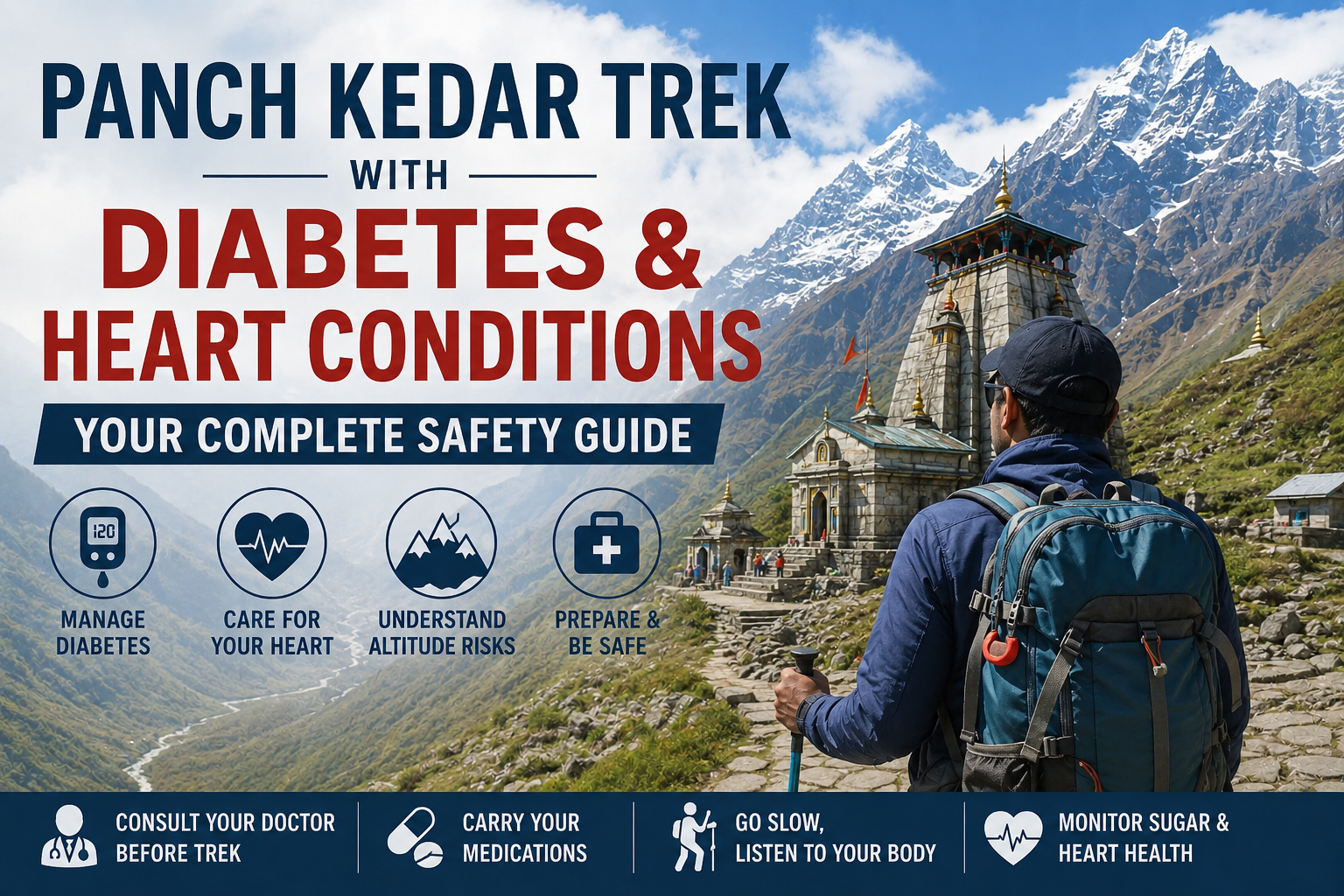
India has over 100 million people living with diabetes and tens of millions managing hypertension or cardiac conditions. Yet the longing to complete a sacred pilgrimage through the Garhwal Himalayas does not pause for a medical diagnosis. The Panch Kedar circuit — five ancient Shiva temples set across some of the most breathtaking terrain in Uttarakhand — draws pilgrims and trekkers of all ages, and a significant portion of that audience lives with exactly these conditions.
The critical question is not whether to attempt this journey. It is how to approach it with the right information, the right preparation, and the right operator behind you. Altitude changes how insulin is absorbed. Cold temperatures alter blood pressure responses. Sustained exertion at elevation stresses the cardiovascular system in ways that are entirely manageable with the correct protocol — and genuinely dangerous without one.
This guide exists to fill a gap that no other Panch Kedar operator has addressed with the depth it deserves. Every section is built around the specific medical realities of the Panch Kedar Trek with Diabetes & Heart Conditions audience — precise, clinically grounded, and matched to how the body actually behaves above 3,000 metres in the Himalayan environment.
Understanding the Altitude Challenge for Chronic Illness Trekkers
Above 2,500 metres, the partial pressure of oxygen drops. The body compensates by increasing breathing rate, elevating heart rate, and raising cardiac output — a process known as acclimatisation. In a healthy trekker, this adjustment unfolds gradually and manageably over 48 to 72 hours. For someone managing a pre-existing condition under pharmacological control, that same physiological response places additional load on systems that are already being supported by medication.
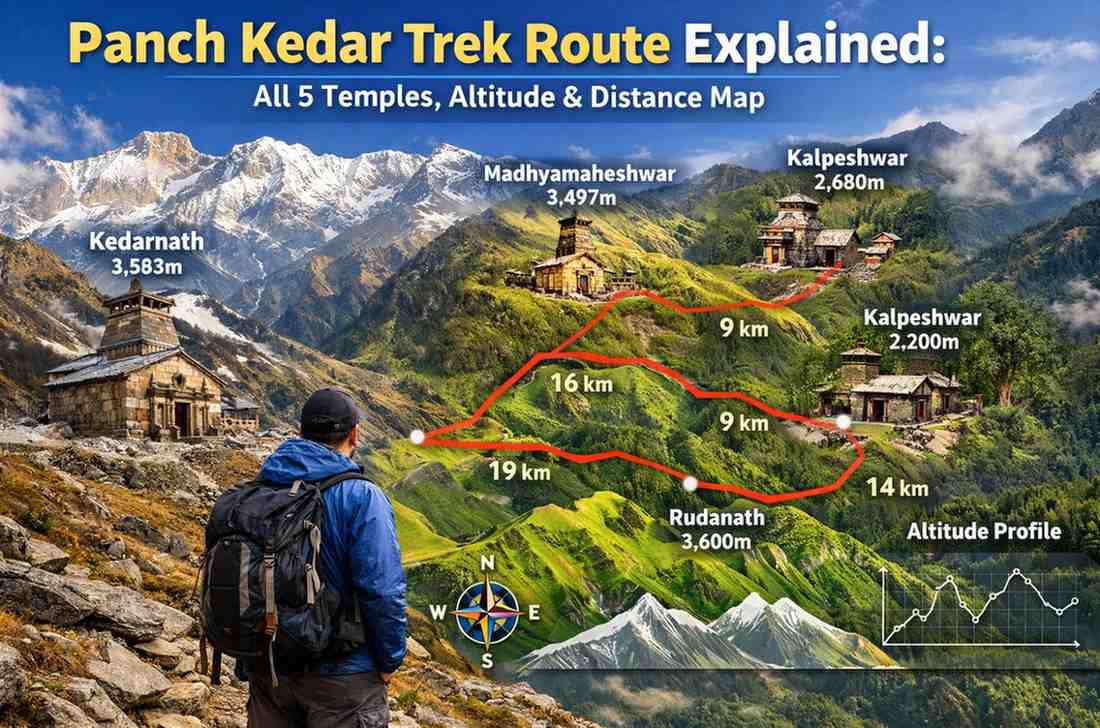
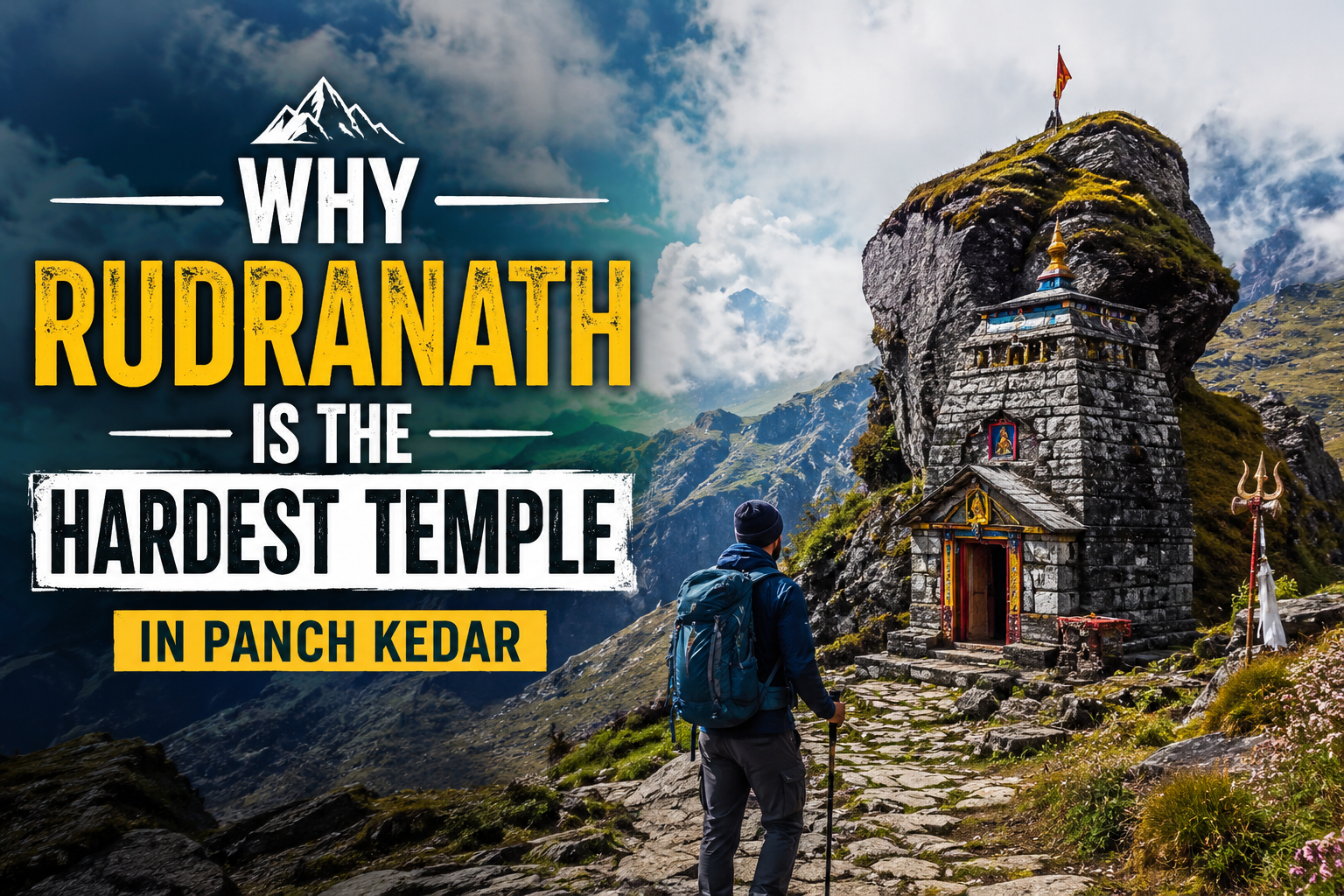
The five temples that comprise the Panch Kedar vary significantly in altitude and approach difficulty. Kalpeshwar sits at approximately 2,200 metres with minimal sustained exertion. Tungnath reaches 3,680 metres with a moderate trail. Kedarnath stands at 3,583 metres — accessible by helicopter for medically managed trekkers. Rudranath at 3,600 metres demands a strenuous two-day approach through remote terrain. Madhyamaheshwar, at approximately 3,497 metres, requires multi-day sustained exertion at altitude.
This variation is crucial. The Panch Kedar is not an all-or-nothing proposition for chronic condition pilgrims. A medically informed approach allows many trekkers to experience meaningful portions of this sacred circuit while remaining within safe physiological limits.
Guptkashi, the primary gateway town for the Panch Kedar route, sits at approximately 1,319 metres — a comfortable starting altitude that allows the body to begin adjusting before any significant ascent. Mountainiax structures its itineraries through Guptkashi specifically to build this acclimatisation buffer into the schedule from day one.
Before you plan your route, our dedicated Panch Kedar trek guide covers the complete elevation profile, day-by-day structure, and temple sequencing for the full circuit, including the logistical options that work best for medically managed trekkers.
Temple-by-Temple Suitability: The Definitive Assessment
The table below gives a direct, honest verdict for each Panch Kedar temple across three chronic conditions: controlled Type 2 diabetes, managed hypertension, and cleared cardiac conditions.
PANCH KEDAR TEMPLE SUITABILITY FOR CHRONIC CONDITION TREKKERS
| Temple | Altitude | Exertion Level | Diabetics (Controlled) | Hypertension | Cardiac (Cleared) |
| Kalpeshwar | ~2,200m | Low | FEASIBLE | FEASIBLE | FEASIBLE |
| Tungnath | ~3,680m | Moderate | FEASIBLE with prep | FEASIBLE with prep | FEASIBLE with clearance |
| Kedarnath | ~3,583m | Low (helicopter only) | FEASIBLE with prep | FEASIBLE with prep | FEASIBLE with sign-off |
| Rudranath | ~3,600m | High (2-day approach) | NOT RECOMMENDED | NOT RECOMMENDED | NOT RECOMMENDED |
| Madhyamaheshwar | ~3,497m | High (multi-day) | NOT RECOMMENDED | CAUTION | NOT RECOMMENDED |
Kedarnath by helicopter, not on foot, is the recommended route for medically managed trekkers
Core Takeaway: Kalpeshwar is accessible to most trekkers with well-controlled chronic conditions. Tungnath and Kedarnath via helicopter are achievable with proper physician pre-clearance and preparation. Rudranath and Madhyamaheshwar involve sustained high-altitude exertion across multiple consecutive days and are not recommended for most chronic condition trekkers without explicit specialist sign-off.
Blood Sugar Management at High Altitude: What Every Diabetic Trekker Must Know
This section addresses panch kedar trek diabetes considerations that are rarely discussed by trek operators — and that every person managing blood glucose must fully understand before ascending above 3,000 metres.
How Cold Temperature Disrupts Insulin Absorption
At high altitude, temperatures drop significantly, particularly in the early morning hours and overnight at camp. Cold skin reduces the rate at which subcutaneous insulin is absorbed into the bloodstream. This creates an unpredictable lag — insulin injected in cold conditions absorbs more slowly, but can then absorb suddenly when the trekker warms up during exertion, producing a sharp, unexpected drop in blood glucose.
Practical management protocol:
- Inject into the abdomen rather than the thighs or arms at altitude; it retains warmth more reliably during trekking
- Store insulin between 2°C and 28°C — freezing destroys the molecule entirely; keep it against your body during the day and inside your sleeping bag overnight
- Use an insulated, temperature-regulated carry case specifically rated for sub-zero mountain environments
Hypoglycaemia Risk: Higher Than at Sea Level
Exercise at altitude increases the rate at which muscles take up glucose, which means the same level of physical exertion that is safe at sea level with a given insulin dose can cause blood sugar to drop faster and further at 3,500 metres. High altitude trekking chronic illness India research consistently identifies hypoglycaemia as the primary glucose-management risk during the first 48 to 72 hours of altitude exposure, when metabolic stress is at its highest.
Trail management checklist for diabetics:
- Test blood glucose before every significant ascent and every two hours on active trekking days
- Keep rapid-acting glucose — gel, tablets, or juice — in a warm, accessible pocket, never at the bottom of your pack
- Set a slightly elevated fasting blood glucose target during active trekking days (8 to 10 mmol/L is a common conservative range — confirm with your endocrinologist)
- Brief your trek leader on your specific hypoglycaemia symptoms before the trek begins, and confirm they know how to administer emergency glucose
- Bring written altitude-specific insulin adjustment guidance from your endocrinologist; do not rely on your standard home protocol above 3,000 metres
Unpredictable weather events — sudden snowfall, fog-forced early descents, or extended rest days — can disrupt meal timing and medication schedules significantly. Our Panch Kedar Trek Cancellation & Weather Risk Guide explains how Mountainiax manages weather-driven itinerary changes and what built-in flexibility exists when conditions demand a rapid descent or an unplanned extra rest day at altitude.
Blood Pressure and Heart Conditions Above 3,000 Metres
Panch Kedar trek blood pressure heart condition management requires understanding both how altitude changes cardiovascular function and how specific medications interact with those changes.
How Hypertension Responds to Altitude
Above 3,000 metres, blood pressure rises in most individuals as a direct physiological response to reduced oxygen availability. For a trekker already managing hypertension on medication, this altitude-driven increase can push readings into a range that demands active intervention. The key variables are: baseline blood pressure control before the trek, the specific antihypertensive class you are taking, and your rate of ascent.
ACE inhibitors, ARBs, and calcium channel blockers generally continue to perform effectively at altitude and do not interfere with the acclimatisation process. Most trekkers on these medications can maintain their standard dosing schedule throughout the circuit.
The Beta-Blocker Warning Every Trekker Must Understand
Beta-blockers reduce resting heart rate. At altitude, where the body needs to increase cardiac output to compensate for lower oxygen availability, a blunted heart rate response can limit the acclimatisation process. This does not mean stopping your beta-blocker — abrupt discontinuation carries its own serious risks. It means discussing your specific beta-blocker, dose, and altitude itinerary with your cardiologist at least four to six weeks before your trek departure, not the week before.
Some cardiologists recommend a dose review before high-altitude travel. Others prescribe an alternative medication specifically for the trekking period. Either way, this conversation must happen with your treating physician well in advance.
What Cardiac Patients Must Know About the Trial
Altitude sickness heart patients face a layered challenge: Acute Mountain Sickness (AMS) and the more serious High-Altitude Pulmonary Oedema (HAPE) both increase cardiac workload. Critically, AMS symptoms — headache, nausea, and fatigue — can overlap with cardiac symptoms, which requires a trained, briefed trek leader to differentiate between them in the field.
Absolute contraindications to high-altitude trekking for cardiac patients include: myocardial infarction within the past 12 months, uncontrolled arrhythmia, severe left ventricular dysfunction, and unstable angina. For all other managed cardiac conditions, suitability depends on your specific functional capacity, which a formal stress test and cardiologist assessment determines with precision.
Guptkashi functions as a deliberate medical staging point in Mountainiax Panch Kedar itineraries. Sitting below 1,400 metres, Guptkashi provides a low-altitude recovery base if symptoms develop during any ascent phase — a practical safety buffer that is rarely built into generic itineraries but is essential for chronic condition trekkers.
Medical Clearance: What Your Doctor’s Letter Must Actually Specify
A clearance letter is not a formality. For a trek leader operating in a remote environment with no immediate medical access, it is a functional clinical briefing document. A medically useful clearance letter must include:
- Specific diagnosis (e.g., Type 2 diabetes, controlled; essential hypertension; stable ischaemic heart disease post-stent)
- Current medications, doses, and timing schedules with altitude-specific notes
- Most recent relevant test results summarised
- Blood pressure or blood glucose thresholds at which the trek leader should initiate descent
- Emergency contact details for your treating physician
- Explicit statement of fitness for moderate trekking activity up to the specified maximum altitude
A generic fitness certificate that simply states “fit for travel” is not adequate documentation for the Panch Kedar trek medical fitness at altitude.
Pre-Trek Testing Checklist
Minimum tests for physician review before clearance is issued:
For all chronic condition trekkers:
- Resting ECG within 3 months of the trek
- Basic metabolic panel covering kidney function and electrolytes
- Complete blood count
For diabetics specifically:
- HbA1c, ideally below 8% for safe high-altitude trekking
- Fasting and post-meal glucose records from the preceding four weeks
- Ophthalmology review to determine if diabetic retinopathy is part of your clinical picture
For cardiac patients:
- Exercise stress test within six months
- An echocardiogram, if not conducted within the past 12 months
- Spirometry if any respiratory component is present
For hypertensive patients:
- Ambulatory blood pressure monitoring report if readings are borderline
- Explicit medication review covering beta-blocker status
Building Your Personal Medical Kit for the Trail
Standard group trek first-aid kits are designed for healthy trekkers. If you are managing a chronic condition on the Himalayan trek, health conditions in the Uttarakhand terrain, you need a personalised supplement to the group kit.
Diabetics must carry independently:
- Blood glucose meter with spare batteries; cold temperatures drain batteries 30 to 50 percent faster than normal
- Sufficient insulin for the full trip duration plus 50 percent emergency reserve for delays, breakage, or spoilage
- Two separate rapid-acting glucose emergency packs stored in different locations on your person
- A glucagon emergency kit is recommended by your endocrinologist for your individual profile
- Insulated insulin carry case rated for sub-zero temperatures
Cardiac and hypertensive trekkers must carry:
- Portable wrist blood pressure monitor (wrist monitors function reliably at altitude)
- Full medication supply plus a minimum three-day emergency reserve stored separately
- Written emergency protocol from your cardiologist, including threshold-based action steps
- Printed copy of your most recent resting ECG for emergency medical personnel reference
All chronic condition trekkers:
- Personal copy of the medical clearance letter in both English and Hindi
- Emergency contact card
- Acetazolamide (Diamox), if prescribed by your physician for AMS prevention
Given that significant sections of the Himalayan trek in the Uttarakhand circuit have no viable road access and limited emergency infrastructure, helicopter evacuation insurance is not optional — it is a non-negotiable requirement for every chronic condition trekker on this route.
Our dedicated Panch Kedar Trek Insurance guide covers everything you need to know about selecting a policy that specifically covers high-altitude trekking with pre-existing chronic conditions, including the policy exclusion clauses to watch for and the exact wording that confirms valid helicopter evacuation coverage in Uttarakhand. Before you finalise your booking, reviewing our Panch Kedar Trek Insurance guide will confirm whether your current policy is genuinely fit for this purpose or leaves critical gaps.
How Mountainiax Supports Trekkers with Medical Conditions
Mountainiax’s approach to panch kedar trek medical fitness is built into the operational structure of every trek where chronic condition trekkers are present — not added as an afterthought at check-in.
Guide Briefing Protocols Every Mountainiax trek leader assigned to a group with chronic condition participants receives a detailed pre-trek briefing on each trekker’s specific diagnosis, medications, blood pressure or glucose thresholds, and emergency action steps. This briefing is not a general health awareness session — it is a condition-specific, person-specific operational document.
Itinerary Design for Medical Conditions. Panch Kedar routes for medically managed groups include additional acclimatisation rest days, lower-altitude staging points, and pre-agreed flexibility to modify or substitute temple visits based on how trekkers are responding to altitude gain. The itinerary is designed for the people on it, not the other way around.
On-Trek Physiological Monitoring Trek leaders carry calibrated pulse oximeters and conduct regular SpO2 readings for all group members, with significantly higher frequency for chronic condition participants. Hypertensive trekkers receive blood pressure checks at every new camp elevation. Diabetics receive glucose monitoring support as required.
Emergency Evacuation Infrastructure Mountainiax maintains active relationships with helicopter evacuation providers serving the Garhwal Himalayan region and has established contact protocols with medical facilities in Guptkashi and Uttarkashi. For every group with cardiac trekkers, the location of the nearest defibrillator and cardiac-capable emergency facility is confirmed and communicated as part of the pre-trek briefing.
Frequently Asked Questions
1. Can diabetics do the Panch Kedar trek?
Yes — with the right preparation and the right temples. Trekkers with controlled Type 2 diabetes and a recent HbA1c below 8% can safely complete Kalpeshwar and Kedarnath (by helicopter) with proper physician pre-clearance. Tungnath is achievable with careful preparation and altitude-specific glucose management. Rudranath and Madhyamaheshwar are generally not recommended for most diabetic trekkers due to sustained high-altitude exertion. Kedarnath trek with diabetes is increasingly viable given helicopter access directly to the temple complex.
2. Is the Kedarnath trek safe for heart patients?
Kedarnath, accessed by helicopter, is considered feasible for most stable cardiac patients with formal cardiologist clearance. The helicopter option eliminates the sustained cardiovascular exertion of the on-foot approach, making it accessible to a broader range of managed cardiac conditions. However, the altitude of 3,583 metres still places a moderate load on the cardiovascular system, which is why detailed physician sign-off and a clear emergency protocol are essential — not optional.
3. What altitude is safe for hypertension patients trekking in the Himalayas?
Most physicians advise trekkers with controlled hypertension to avoid sleeping above 3,500 metres until they have properly acclimatised over multiple days. For the Panch Kedar circuit, Kalpeshwar is broadly accessible. Tungnath, Kedarnath, Rudranath, and Madhyamaheshwar all require careful acclimatisation staging and a medication review specific to altitude. Your acceptable blood pressure range at altitude — and the threshold at which you should descend — should be explicitly established with your treating physician before departure.
4. Does high altitude affect blood sugar levels?
Yes. Physical exertion at altitude increases the rate of muscle glucose uptake, which can lower blood sugar faster than at sea level for a given level of activity. Cold temperatures also slow insulin absorption, creating unpredictable glucose fluctuation. Diabetics trekking above 3,000 metres should test more frequently, carry emergency glucose at all times in accessible, warm locations, and set a slightly elevated conservative blood glucose target range on active trekking days — confirmed with their endocrinologist.
5. What should a clearance letter for high-altitude trekking with a chronic condition include?
An operationally useful clearance letter should specify: the exact diagnosis, current medications and doses, altitude-relevant medication notes, recent test results, blood pressure or glucose thresholds that should trigger descent, the physician’s emergency contact, and explicit confirmation of fitness for trekking at a specified maximum altitude. A generic travel fitness certificate does not meet this standard.
Summary
The Panch Kedar is one of the most spiritually significant and visually extraordinary journeys available in the Indian Himalayas. Living with diabetes, hypertension, or a managed cardiac condition is not a reason to abandon that aspiration. It is a reason to approach it with far greater precision, medical grounding, and operational support than the average trekker requires.
This Panch Kedar Trek with Diabetes & Heart Conditions Guide reflects Mountainiax’s core belief that every trekker — regardless of their medical profile — deserves accurate, honest information rather than vague disclaimers. The right temple, the right season, the right medications, a properly briefed guide, and a comprehensive emergency plan make the difference between a safe, spiritually profound pilgrimage and a preventable medical incident.
Consult your physician specifically for high-altitude conditions. Prepare with the clinical detail this environment demands. And choose an operator who treats your medical profile not as a barrier to manage, but as a responsibility they are equipped and trained to honour.
With the Panch Kedar Yatra season approaching, it’s time to plan something truly extraordinary. From breathtaking Himalayan peaks to spiritually powerful temples hidden deep in remote valleys, this journey offers an experience that goes beyond a typical trek—it becomes a story you carry for life. To make your journey seamless and well-organised, choose the best trekking company in Uttarakhand for reliable trek packages, detailed itineraries, and hassle-free booking.
Visit this page for Trek Packages, Itinerary & Booking.