When your team needs more than just a resort weekend, the mountains call. Corporate India is rapidly shifting from conventional offsite hotels to purpose-driven Himalayan experiences, and few journeys match the depth and impact of a well-organised Panch Kedar trek for corporate groups and team outings. This is not merely a pilgrimage route — it is a transformational leadership arena wrapped in ancient mythology, raw Himalayan wilderness, and shared human resilience.
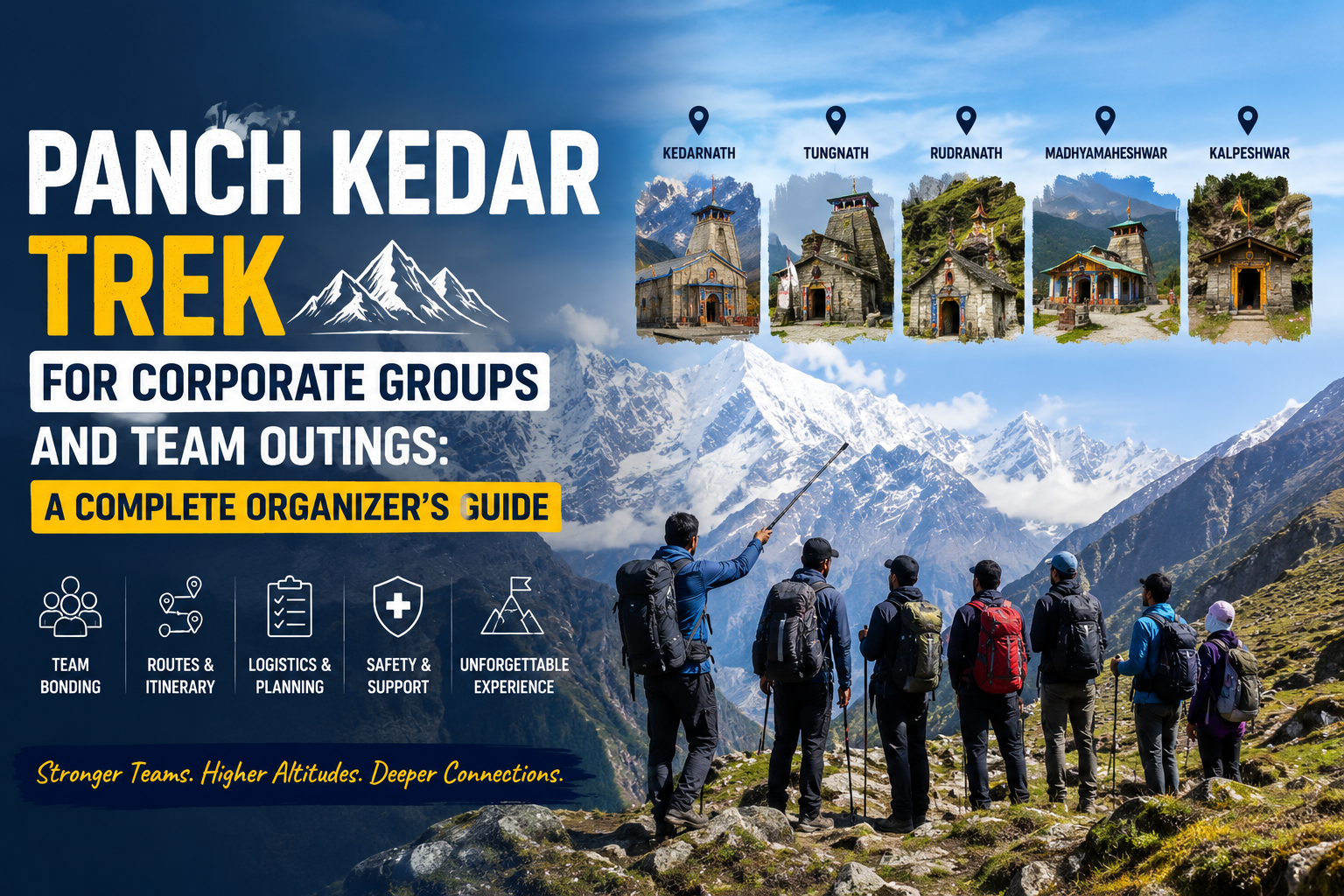
The Panch Kedar circuit covers five sacred temples dedicated to Lord Shiva, nestled across the Garhwal Himalayas of Uttarakhand. Kedarnath, Tungnath, Rudranath, Madhyamaheshwar, and Kalpeshwar each sit at different altitudes, connected by trails that wind through alpine meadows, dense rhododendron forests, and dramatic river valleys. For a corporate group, every kilometre is a lesson in trust, communication, and collective grit that no boardroom exercise can replicate.
Whether you are an HR manager planning an annual offsite, a team leader looking to rebuild morale after a demanding quarter, or an adventure-curious organisation seeking something meaningful, this guide gives you everything you need. From route planning and fitness preparation to logistics, permits, and post-trek ROI — read on to organise an experience your team will talk about for years.
Why the Panch Kedar Circuit Works Exceptionally Well for Corporate Groups
The Himalayan landscape has a way of stripping away office hierarchies and putting everyone on equal footing. On a high-altitude trail, the junior analyst who hikes every weekend often guides the senior manager through a steep switchback. That single moment does more for team equity than months of workshops.
Here is why the Panch Kedar yatra stands apart from standard corporate outings:
- Shared physical challenge: Multi-day trekking forces individuals to rely on each other, building genuine interdependence rather than simulated team exercises.
- Diverse terrain and difficulty levels: The five Kedars offer routes ranging from moderate to challenging, making it possible to calibrate the experience based on your team’s overall fitness and adventure readiness.
- Deep cultural and spiritual context: The mythology behind these temples gives the journey a storytelling layer that purely recreational outings simply lack.
- Digital detox: Most segments of the trail have limited mobile connectivity. This enforced unplugging dramatically improves peer-to-peer communication and mindful presence — two things most modern teams desperately need.
- Psychological resilience: Completing a high-altitude multi-day trek instils a measurable confidence boost. Teams return from the mountains with a renewed belief in their collective capability, which directly translates into workplace problem-solving.
The Five Forms of Shiva worshipped across these temples also give each day of the trek a distinct identity. Understanding that Kedarnath enshrines the hump, Tungnath the arms, Rudranath the face, Madhyamaheshwar the navel, and Kalpeshwar the matted hair of Lord Shiva transforms the journey into a living mythology lesson — which makes for incredibly bonding campfire conversations.
Understanding the Route: A Corporate Organiser’s Overview of All Five Temples
Before you begin planning group logistics, it is essential to understand what the trek actually involves.
Kedarnath — 3,583 m
The most iconic of the five, Kedarnath is the traditional starting point of the Panch Kedar yatra. The 16 km trek from Gaurikund is well-developed with paved pathways and porter availability. For corporate groups with mixed fitness levels, helicopter options and mule services are available, allowing everyone to participate regardless of physical ability. Kedarnath sets the emotional tone for the entire journey.
Tungnath — 3,680 m
The world’s highest Shiva temple sits above Chopta, accessible via a 3.5 km trail from the base. The gradient is manageable for most moderately fit individuals, and the views from the nearby Chandrashila Peak at 4,130 m are breathtaking. This section is ideal for a confidence-building summit attempt by your entire group.
Rudranath — 2,286 m
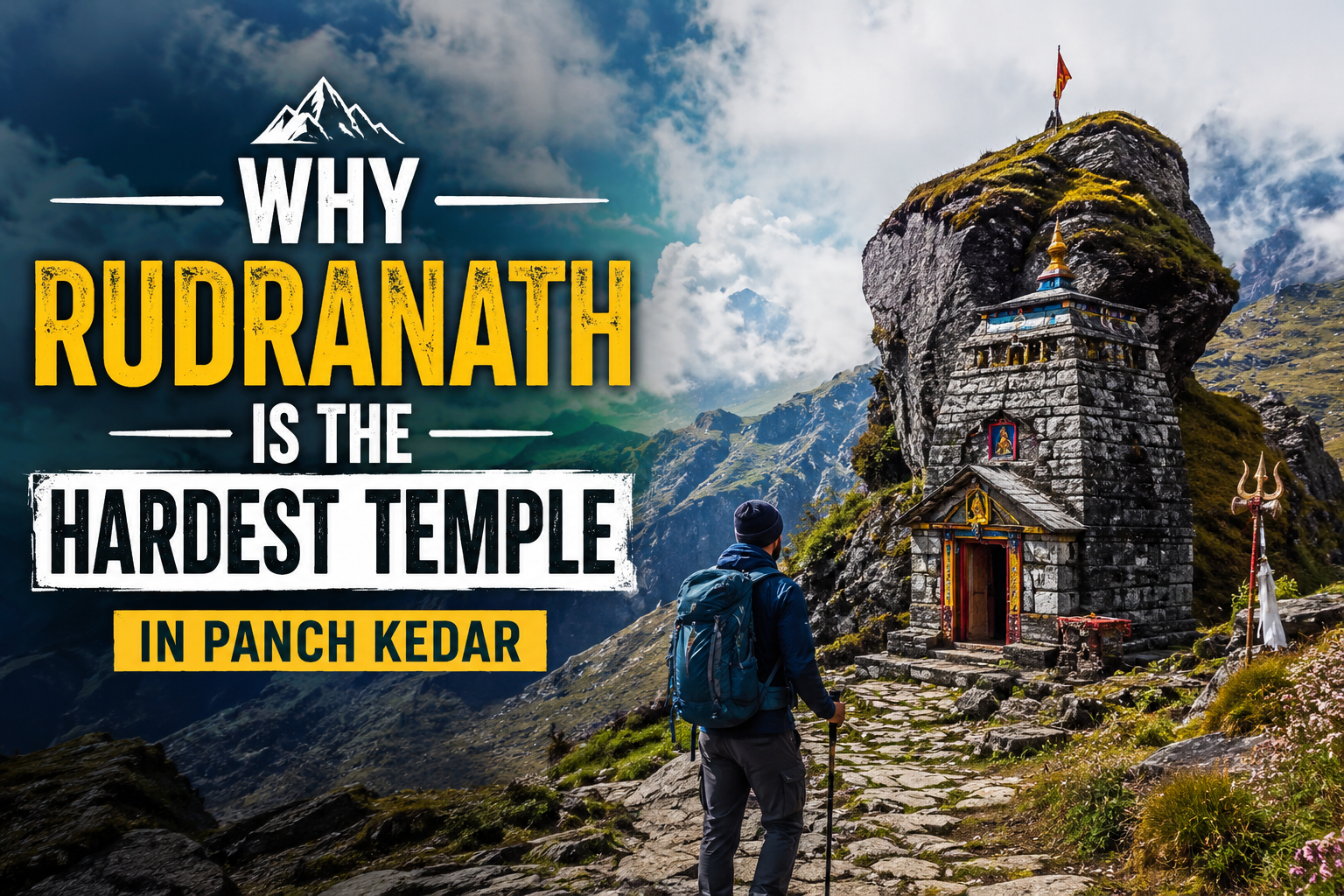
The most mystical of the five, Rudranath demands a 19 km trek from Sagar Village through untouched forests and remote bugyal meadows. This leg tests mental endurance more than physical strength and is where most teams report the deepest bonding moments of the entire circuit.
Madhyamaheshwar — 3,497 m
Located on a trail beginning from Uniana village near Ransi, Madhyamaheshwar offers arguably the most visually stunning campsite of the circuit — with views of Chaukhamba and Neelkanth rising directly above the temple. Overnight camping here, under a sky unmarred by light pollution, is a corporate wellness experience unlike any other.
Kalpeshwar — 2,200 m
The final and most accessible temple is located near Urgam village in Chamoli district, approachable via a short 2 km trail and open year-round. It provides a gentle, celebratory close to the circuit — perfect for group reflection and a structured debrief session.
Best Time to Plan a Corporate Panch Kedar Trek
Timing your corporate outing correctly determines whether the experience is transcendent or merely tolerable.
May to June — Pre-Monsoon (Highly Recommended)
Trails are clear of snow, rhododendrons are in full bloom, weather is stable, and all five temples are open. Temple opening dates in 2026 begin from late April, with all shrines accessible by mid-May. This is the most popular window for corporate group bookings.
September to October — Post-Monsoon (Equally Excellent)
Skies are crystal clear, temperatures are cool but comfortable, and the post-rain Himalayan landscape is intensely green and photogenic. Footfall is lower than summer, offering a more private and focused group experience. Highly recommended for organisations that prefer quieter trails.
July to August — Monsoon (Not Recommended)
Heavy rains create landslide risks, slippery trails, and disrupted road access throughout Garhwal. Corporate safety standards make this period unsuitable for group bookings.
November to April — Off Season
Temples are closed and trails are snowbound. Kalpeshwar alone remains accessible throughout the year.
Group Size, Fitness Planning, and Medical Preparedness
Corporate groups considering the full Panch Kedar circuit should plan groups of 10 to 25 participants for optimal management. Larger organisations can consider splitting into staggered batches of the same size.
Recommended fitness baseline: Participants should be able to walk 5 to 8 km on flat terrain without discomfort at least three weeks before departure. Light cardio and stair climbing twice weekly for a month prior significantly reduces the risk of altitude-related fatigue.
Medical screening: Anyone with a history of cardiac issues, severe asthma, or blood pressure instability should consult a physician before committing to high-altitude sections. A baseline fitness assessment by your corporate HR or wellness team is strongly advisable.
Altitude acclimatisation: The itinerary should include a buffer day — ideally in Rishikesh or Guptkashi — to allow the body to begin adjusting before the trek commences. This single addition dramatically reduces the incidence of Acute Mountain Sickness within the group.
First aid: Your trek organiser should carry a well-stocked high-altitude first aid kit including Diamox, pulse oximeters, and emergency oxygen. Confirm this before departure.
For organisations planning the complete circuit but with tight schedules, the Panch Kedar Helicopter Yatra is an excellent alternative. Helicopter services from Phata and Sirsi cover Kedarnath and select other shrines, allowing groups to experience the elevation and cultural depth of the journey without the full trekking commitment.
Logistics Blueprint for Corporate Organisers
Handling group logistics for a Himalayan circuit of this scale requires structured planning. Here is a practical checklist every organiser should follow.
Travel and Transportation
Book dedicated private vehicles from Rishikesh or Haridwar for the group. The road journey to Guptkashi, the base hub for the Panch Kedar yatra, is approximately 200 km and takes around 7 to 8 hours. Confirm the vehicles are insured and suited for mountain roads.
Accommodation
Pre-booking is non-negotiable for corporate groups. Options range from guesthouses in Guptkashi and Chopta to fixed camping setups near Madhyamaheshwar and Rudranath. Inform your trek operator about dietary requirements and any medical meal plans well in advance.
Permits and Paperwork
The Panch Kedar circuit passes through eco-sensitive and protected zones. Forest permits and entry fees are mandatory. A reputable trek operator handles all documentation — but corporate HR teams should obtain confirmation in writing. Maintain a group list with ID proof copies for all participants.
Insurance
All corporate participants should hold valid adventure travel insurance covering high-altitude trekking, emergency evacuation, and medical hospitalisation. This is a non-negotiable requirement, not optional wellness cover.
Communication Plan
Brief your team on connectivity limitations. Pre-assign a team leader per sub-group of five. Satellite communication devices or walkie-talkies provided by your trek organiser are strongly advisable for large corporate groups.
Integrating Team Building Activities Along the Route
The Panch Kedar trek is naturally rich in leadership learning moments. Structured facilitation, however, amplifies the impact enormously. Consider building these touchpoints into your itinerary:
- Morning intention setting: A brief five-minute group circle before each day’s trek where team members share one word describing their mindset. Simple, powerful, and costs nothing.
- Buddy system rotation: Assign trekking buddies and rotate pairings daily. This systematically breaks cliques and builds cross-functional relationships.
- Summit debrief: At each temple, hold a ten-minute standing debrief: What did we overcome today? Who supported you? What can we carry back to the office from this moment?
- Evening storytelling: Use the campfire or guesthouse communal dinners for informal storytelling rounds. The narrative vulnerability that emerges at altitude often sparks workplace connections that persist for years.
A certified team-building facilitator travelling with the group, even for two or three days, can structure these sessions and help decode the leadership metaphors the trek presents organically.
Cost Planning for Corporate Group Bookings
Budget clarity helps HR and finance teams plan effectively. Here is a realistic cost framework per person for the full Panch Kedar circuit:
- Trek package (accommodation, meals, guide, permits): INR 18,000 to 30,000 per person
- Transportation from Rishikesh and back: INR 2,000 to 4,000 per person
- Adventure travel insurance: INR 800 to 1,500 per person for a 12-day policy
- Personal gear and rental: INR 1,500 to 3,000 per person
- Group emergency contingency fund: INR 15,000 to 20,000 for the entire group
Groups of 15 or more typically qualify for negotiated group pricing from reputable Himalayan trek operators. Always request a detailed cost breakup and confirm what is and is not included before signing any agreement.
Choosing the Right Trek Operator for Corporate Groups
Not every trek company is equipped to handle a corporate group. Here is what to evaluate when shortlisting operators:
- Proven group experience: Look specifically for operators who have handled corporate batches, not just general group trekking. Ask for references.
- Certified guides: Guides should hold valid certifications from NIMAS or an equivalent institution. This is a safety baseline, not a premium feature.
- Emergency protocols: Ask specifically about altitude emergency response plans, evacuation routes, and hospital tie-ups in Rishikesh and Srinagar Garhwal.
- Customisation capability: A good operator adjusts pace, accommodation style, and activity integration based on your group’s profile — not a one-size-fits-all package.
- Sustainable practices: Choose operators who follow Leave No Trace principles and support local porter and guide communities. This aligns with contemporary corporate ESG and CSR values.
At mountainiax.com, our corporate Panch Kedar trek experiences are designed from the ground up with team dynamics, safety, and meaningful impact in mind. From the first enquiry to the final group debrief, we manage every detail so your team can focus entirely on the experience.
What to Pack: A Corporate Group Gear Checklist
Individual participants should be briefed on a standard high-altitude trekking packing list before departure.
- Clothing: Moisture-wicking base layers, fleece mid-layer, waterproof outer shell, trekking trousers, warm hat, sun hat, lightweight gloves, and gaiters for Madhyamaheshwar and Rudranath sections
- Footwear: Ankle-support waterproof trekking boots, broken in well before the trek; lightweight camp sandals for evenings
- Daypack essentials: Sunscreen SPF 50+, UV sunglasses, personal water bottle or hydration bladder, high-energy snacks, headlamp with spare batteries, trekking poles, personal first aid kit
- Documents: Government-issued photo ID, adventure insurance documents, emergency contact card, and any prescribed medication
- Electronics: Power bank, camera if desired. Brief the group not to rely on mobile phones for navigation or communication on the trail
Post-Trek Integration: Bringing the Mountains Back to the Office
One of the most underutilised aspects of corporate trekking in the Himalayas is the post-experience debrief. An experience as powerful as the Panch Kedar yatra deserves structured integration back in the workplace.
Within one week of return, host a 90-minute facilitated session where team members share their most significant personal insight from the trek. Map these insights to workplace behaviours: how someone who pushed through their fear at Chandrashila can apply that same courage to a difficult client conversation; how the buddy system on trail can inspire a peer mentoring initiative in the office.
Create a shared photo album or journey video using clips and photographs from the trek. Visual memory anchors the emotional learning and gives the organisation a strong internal culture story worth sharing.
Frequently Asked Questions
1. Is the Panch Kedar trek suitable for people with no prior trekking experience?
The complete Panch Kedar circuit is best suited for individuals with basic fitness and ideally some walking or hiking experience. Absolute beginners can participate if the itinerary includes adequate acclimatisation days and they prepare physically at least four to six weeks in advance.
2. How many days should a corporate group allocate for the full Panch Kedar yatra?
A full circuit requires 11 to 14 days including travel from Delhi or Dehradun. For organisations with tighter schedules, partial circuits covering Kedarnath and Tungnath can be completed in 5 to 7 days and still deliver a powerful group experience.
3. What is the ideal group size for a corporate Panch Kedar trek?
Groups of 10 to 20 participants are considered ideal. This range allows for intimate group dynamics while remaining logistically manageable. Larger organisations should consider splitting into two batches departing a week apart.
4. Can the trek be customised for mixed fitness levels within the same corporate group?
Yes. A skilled operator can create a tiered itinerary where less fit participants use helicopter services or mule support for certain sections while fitter members complete the full trail. The group reunites at each temple site, maintaining a shared experience without excluding anyone.
5. Are there specific permits required for corporate groups?
Yes. Forest entry permits, eco-zone fees, and temple entry registrations apply. Reputable operators include all permits in the package. HR teams should confirm in writing that all regulatory requirements are covered before departure.
Conclusion
The mountains have always been humanity’s greatest teacher, and the Panch Kedar circuit simply offers your team the most powerful classroom available. What begins as a corporate outing ends as a shared identity — a story of altitude, endurance, and human connection that follows your team back into every meeting room and project sprint.
Beyond the temple bells and Himalayan panoramas, what your group carries home is something far more valuable: the lived proof that they can face the unknown together and come out stronger on the other side. That is the kind of team culture no workshop budget can manufacture.
The Garhwal Himalayas are ready. The trails are open. The only question is whether your organisation is willing to invest in an experience that truly transforms people, not just entertains them for a weekend.
With the Panch Kedar Yatra season approaching, it’s time to plan something truly extraordinary. From breathtaking Himalayan peaks to spiritually powerful temples hidden deep in remote valleys, this journey offers an experience that goes beyond a typical trek—it becomes a story you carry for life. To make your journey seamless and well-organised, choose the best trekking company in Uttarakhand for reliable trek packages, detailed itineraries, and hassle-free booking.
Visit this page for Trek Packages, Itinerary & Booking.